

Start Vending Business with $0 Upfront. Click here
1-Year Warranty & Nationwide Support
Start Vending Business with $0 Upfront. Click here
1-Year Warranty & Nationwide Support
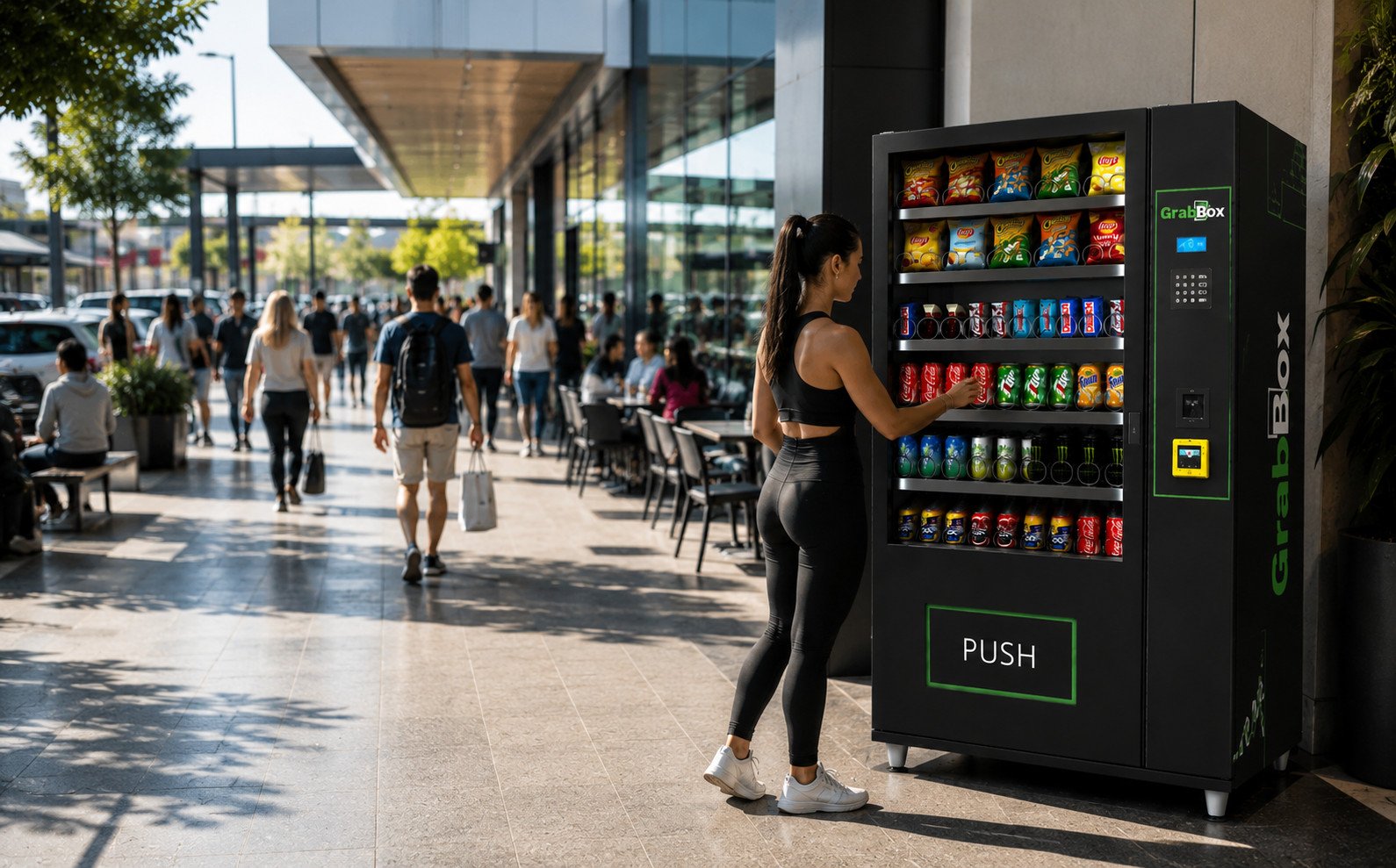
A vending machine business is one of the few side income opportunities in Australia that can genuinely run itself. Once your machine is placed, stocked, and connected to a cashless payment system, it earns revenue around the clock without your daily involvement.
But is it actually worth it? This guide gives you an honest, numbers-based answer — covering startup costs, realistic income expectations, the risks involved, and what separates profitable vending operators from those who struggle.
A vending machine business in Australia involves purchasing one or more vending machines, placing them in high-traffic locations, stocking them with snacks and drinks, and collecting the revenue from sales. You own the machines outright and keep the profits after the cost of stock, electricity, and any location commission.
There are no franchise fees, no staff costs, and no complex business infrastructure required. It is one of the most straightforward business models available to Australian entrepreneurs.
Here is what makes vending machines genuinely attractive as a business in Australia.
A vending machine business is not without its challenges. Here is what the enthusiastic YouTube videos tend to leave out.
Income depends almost entirely on location quality. Here is a realistic breakdown across different location types.
| Location Type | Daily Sales (est.) | Monthly Revenue | Monthly Profit (est.) |
|---|---|---|---|
| Small office — 20 to 30 staff | 10-20 transactions | $900-1,800 | $200-500 |
| Medium office — 50+ staff | 25-50 transactions | $2,250-4,500 | $600-1,400 |
| Gym or fitness centre | 30-70 transactions | $2,700-6,300 | $700-2,000 |
| Warehouse or factory | 40-80 transactions | $3,600-7,200 | $900-2,300 |
| Hospital or medical centre | 50-100 transactions | $4,500-9,000 | $1,200-3,000 |
Estimates based on an average transaction value of $3.00 and a 35% product margin after stock costs. Actual results depend on location, product mix, and pricing.
Break-even time is the most important number for any new vending operator. Here is how it looks across different profit scenarios for a $5,500 machine.
| Monthly Profit | Break-Even Time | Location Type |
|---|---|---|
| $200/month | 27 months | Small quiet office |
| $400/month | 14 months | Medium office or small gym |
| $700/month | 8 months | Busy gym or mid-size office |
| $1,200/month | 5 months | Warehouse or large gym |
| $2,000/month | 3 months | Hospital or high-traffic site |
The difference between a mediocre location and a great one is not marginal — it can be the difference between a 27-month break-even and a 3-month break-even on the same machine. Location is the business.
Here is a realistic growth scenario for an Australian vending operator starting with a single machine and reinvesting profits.
| Timeline | Machines | Monthly Revenue (est.) | Monthly Profit (est.) |
|---|---|---|---|
| Month 1-6 | 1 machine | $1,500-3,000 | $400-900 |
| Month 6-12 | 2 machines | $3,000-6,000 | $800-1,800 |
| Year 2 | 4-5 machines | $6,000-12,000 | $1,600-3,600 |
| Year 3 | 8-10 machines | $12,000-24,000 | $3,200-7,200 |
At 8 to 10 well-placed machines, a vending business can generate a meaningful full-time income. Most operators who reach this scale do so by consistently reinvesting profits from early machines into new ones rather than relying on external finance.
This is not a topic many vending business guides cover in enough detail — but it is critical.
Any vending machine operated in a commercial premises in Australia must carry the RCM mark, confirming it meets Australian Electrical Safety Standards. Operating a non-compliant machine exposes your business to serious risks.
Buying a cheap imported machine or a used machine without compliance documentation is the single biggest mistake new vending operators make in Australia. The short-term saving is rarely worth the risk.
Every GrabBox machine is fully RCM compliant, comes with compliance documentation, and is backed by a 1-Year Warranty from a registered Australian business — Global Vending Pty Ltd, ACN 691 233 584.
👉 Learn about RCM compliance and your legal obligations →
A vending machine business suits a specific type of person. Here is an honest self-assessment.
A vending machine business is likely a good fit if you:
A vending machine business is probably not a good fit if you:
👉 Read our full guide to starting a vending machine business →
Yes — in the right location. A single machine in a high-traffic site such as a gym, warehouse, or large office can generate $700 to $2,000 per month in profit. A machine in a low-traffic location will generate significantly less. Location quality is the primary driver of profitability.
You can start a vending machine business in Australia for approximately $6,000 to $7,500 — covering the machine purchase from $5,500, initial stock of $200 to $500, and basic public liability insurance. Finance options are available if you prefer to spread the cost.
Break-even time depends on your location. A machine in a high-traffic site generating $700 to $1,000 monthly profit can break even in 6 to 9 months. A machine in a quieter location may take 18 to 24 months. Location selection is the single biggest factor in how quickly you recoup your investment.
Yes — and most operators do exactly this. Restocking typically takes one to two hours per machine per week, making it one of the most time-efficient side income businesses available. Many operators run five to ten machines alongside full-time employment before transitioning to vending full-time.
No prior experience is required. The fundamentals — finding a location, stocking the machine, and monitoring sales — are straightforward. The learning curve is short, and most operators feel comfortable managing their first machine within the first few weeks.
The biggest risk is securing a poor location. A machine that does not generate enough foot traffic will not cover its costs. Research your locations carefully, prioritise sites with captive audiences and consistent daily visitors, and always confirm a placement before purchasing your machine.
GrabBox supplies RCM-compliant vending machines to new and experienced operators across Australia — from first-time buyers starting with a single machine to established operators expanding their route. Three models available from $5,500 with Australia-wide delivery and a 1-Year Warranty.



Be the first to hear about the latest offers and new machines.
Join hundreds of smart investors building passive income with Australia’s safest vending machines
Talk to a vending machine expert
Text us fast replies during business hours.
Live chat available now.